
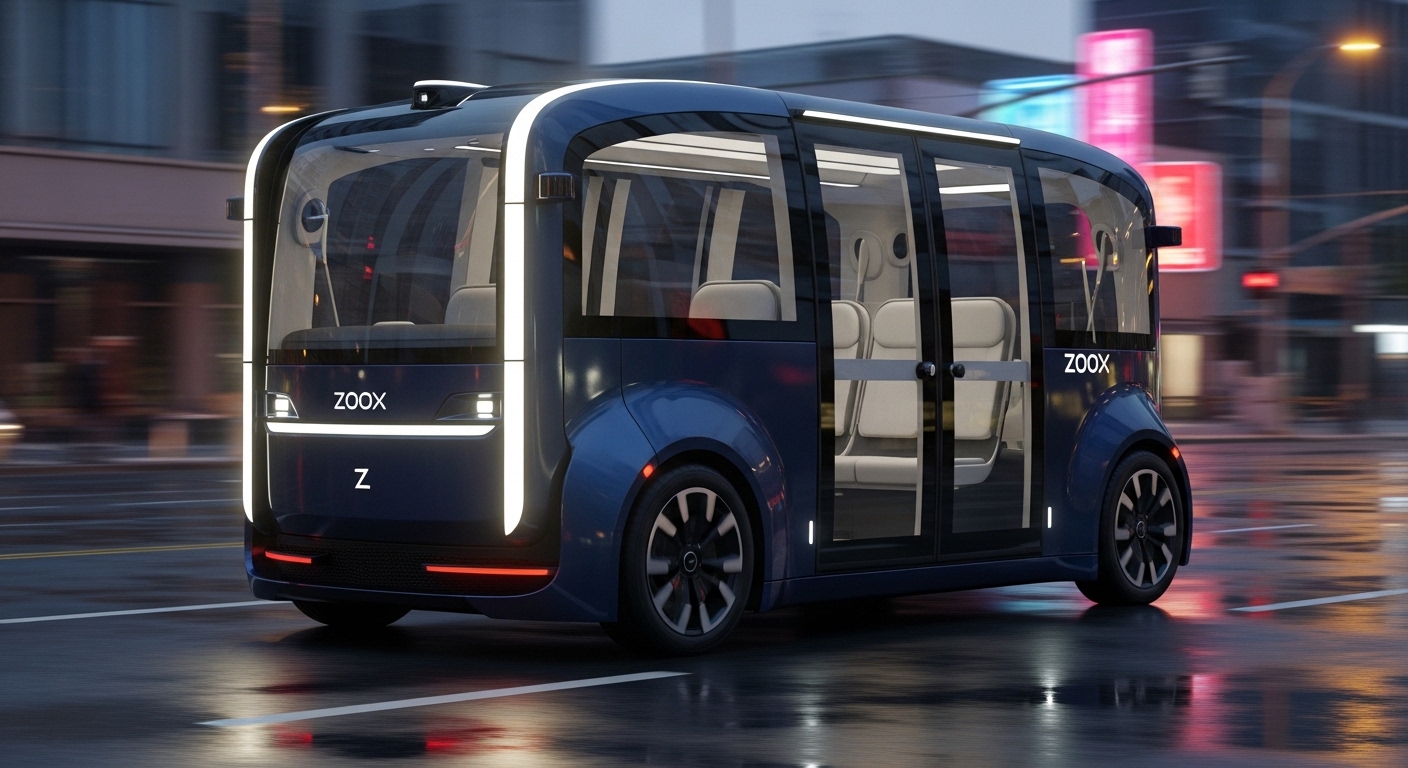
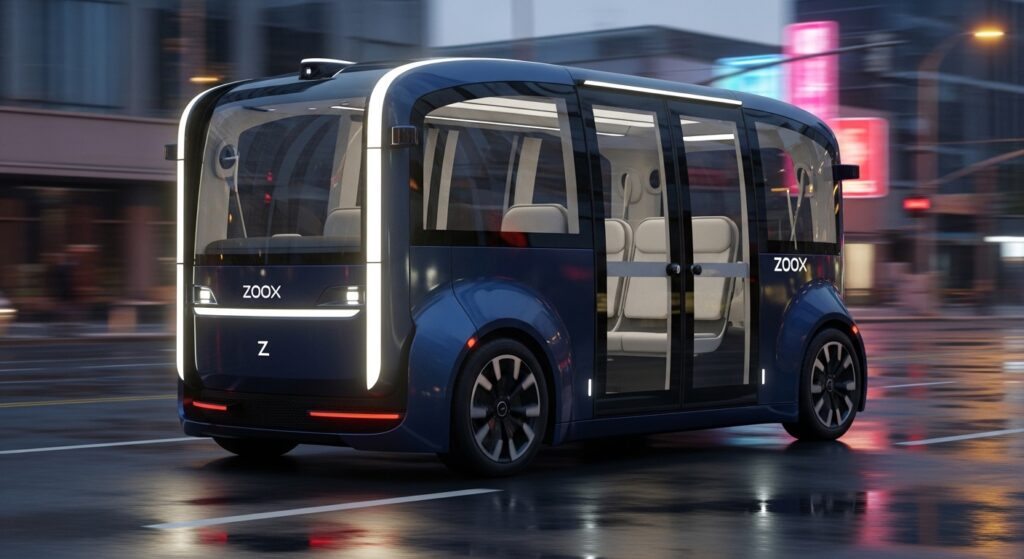
Zoox Autonomous Vehicle offers a glimpse into the next era of urban mobility: a fully electric, purpose‑built robotaxi that combines advanced autonomous driving technology with a strong emphasis on safety, comfort, and sustainability. Designed from the ground up as a self‑driving vehicle rather than a retrofitted car, Zoox is shaping how passengers will experience driverless rides in cities like Las Vegas and beyond. Below, you’ll find everything you need to know about the Zoox autonomous vehicle, its technology, safety systems, where it operates, and what it means for the future of robotaxi mobility.
What Is the Zoox Autonomous Vehicle?
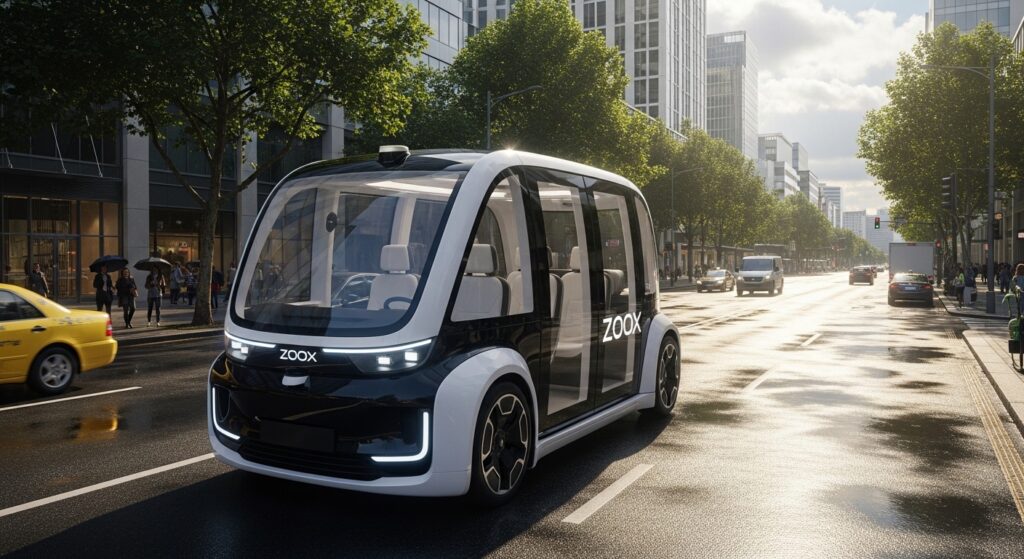
The Zoox robotaxi is a self‑driving, all‑electric vehicle engineered specifically for autonomous ride‑hailing services. Unlike traditional cars adapted for autonomy, Zoox is a purpose‑built robotaxi with a compact, symmetrical body and no fixed “front” or “back.” This bi‑directional design allows the vehicle to navigate and stop in either direction, reducing the need to turn around and improving efficiency in dense urban environments.
Zoox’s vehicle architecture supports Level 4 autonomous driving, meaning it can operate without human intervention in geofenced, pre‑mapped areas. The layout is passenger‑centric, with a lounge‑like interior and seating that faces each other, creating a more engaging and social experience than conventional taxis or rideshares.
Technology Behind the Zoox Autonomous Vehicle
Zoox’s autonomous driving stack is built around a sophisticated perception system that fuses multiple sensor types to build a 360‑degree understanding of the vehicle’s surroundings. The robotaxi uses cameras, radar, lidar, and long‑wave infrared sensors to detect other vehicles, pedestrians, cyclists, and obstacles in real time, even in challenging lighting or weather conditions.
The software‑defined autonomy system processes this data to plan routes, anticipate hazards, and make split‑second decisions while driving. Zoox’s platform is continuously updated over the air, allowing the vehicle to learn from shared experiences across the fleet and improve safety and performance over time. Simply put, the Zoox self‑driving vehicle isn’t just reacting to its environment-it’s interpreting it.
Safety and Crash Protection in Zoox Autonomy
Safety is central to Zoox’s autonomous vehicle design. The company has published detailed safety reports outlining how its vehicles operate with proactive safety systems that go beyond regulatory minimums. These reports emphasize features like redundant subsystems-no single point of failure-so the vehicle can safely stop or pull over if any component fails.
Zoox’s robotaxi is engineered with shorter stopping distances than many conventional vehicles, thanks to four‑wheel steering and optimized braking systems. The compact, symmetrical body also improves crash protection, and the vehicle’s structure and airbag system are tested to withstand impacts while minimizing injury risk for passengers and pedestrians. For commuters and tourists alike who wonder “is Zoox autonomous vehicle safe,” the engineering and documentation so far point toward a robust safety‑first approach.
Where and How Zoox Autonomous Vehicle Operates
Zoox currently operates its robotaxi service in select cities, with Las Vegas serving as a key early deployment market. The vehicles run in geofenced areas mapped by Zoox’s engineers, focusing on well‑trafficked routes where driverless mobility can reduce congestion and improve accessibility. In Las Vegas, riders can hail a Zoox robotaxi through the company’s app or partner platforms much like using a rideshare service.
Testing and deployment also extend to California, where Zoox continues to validate its autonomous driving system in varied urban and suburban environments. Operating speeds are kept within conservative limits, and the robotaxis adhere strictly to traffic rules and environmental conditions to maintain a safe, predictable experience for passengers, pedestrians, and other road users.
Legal and Regulatory Landscape for Zoox Autonomy
Zoox’s path to commercial robotaxi service involves close collaboration with federal and state regulators. The company has sought exemptions from the National Highway Traffic Safety Administration (NHTSA) to deploy vehicles without traditional steering wheels and pedals, following the same regulatory framework used by other autonomous vehicle manufacturers.
In Nevada and California, Zoox must comply with local autonomous vehicle regulations, including reporting requirements, safety certifications, and restrictions on operating zones and hours. These rules help ensure that the Zoox autonomous vehicle operates transparently and responsibly, while also addressing questions about liability, insurance, data privacy, and cybersecurity as the fleet scales.
User Experience and Passenger Comfort
Riding in a Zoox robotaxi is designed to feel more like stepping into a quiet, customizable lounge than a standard car. The interior features face‑to‑face seating, climate controls, and entertainment options that can be tailored through the app. Passengers can adjust lighting, ambient sounds, and even select specific routes or stops, reinforcing the sense of a personalized, on‑demand mobility experience.
Accessibility is another focus, with attention to making it easier for passengers of different abilities to board and ride comfortably. As autonomous ride‑hailing expands, Zoox’s user‑centric design could make robotaxis an attractive option for airport shuttles, tourism, and everyday urban transit.
Safety, Ethics, and Responsible Deployment
Autonomous mobility raises important ethical questions, and Zoox’s approach reflects an effort to balance safety, transparency, and public trust. The company’s safety philosophy emphasizes not just avoiding collisions but also creating predictable, respectful interactions with pedestrians and other road users.
Zoox also considers how its technology impacts employment, data privacy, and community trust. By engaging with regulators, local governments, and the public, the company aims to deploy its autonomous vehicle in a responsible way that aligns with broader societal expectations. These considerations make Zoox not only a technological pioneer but also a player in the ongoing conversation about ethical, responsible AI on the road.
Cost, Availability, and Commercial Use Cases
While Zoox has not disclosed a universal pricing model, early indications suggest that robotaxi rides could sit somewhere between traditional taxis and personal car ownership in terms of cost per mile. The absence of a human driver lowers operational overhead, but maintenance, safety systems, and fleet management still factor into the economics.
Zoox’s commercial use cases extend beyond individual rides. Potential applications include airport shuttles, hotel or resort transfers, last‑mile urban transit, and as part of larger mobility‑as‑a‑service platforms. As the technology matures and regulatory approval widens, Zoox robotaxis could become a common sight in major cities, offering a convenient, all‑electric alternative to congestion‑prone private vehicles.
Comparing Zoox Autonomous Vehicle to Competitors
When stacked against competitors like Waymo and Cruise, Zoox stands out for its purpose‑built robotaxi design and bi‑directional layout. Unlike many competitors’ vehicles-often modified consumer cars-Zoox’s architecture is tailored for autonomy, with shorter stopping distances, optimized sensor placement, and a passenger‑focused interior.
In terms of safety and user experience, Zoox emphasizes proactive safety features, redundant systems, and a comfortable, lounge‑style cabin. While Waymo and Cruise lead in miles‑driven and geographic scale, Zoox’s holistic approach to design, safety, and comfort positions it as a strong contender in the next phase of robotaxi competition.
Final Verdict: Is Zoox Autonomous Vehicle the Future?
Zoox Autonomous Vehicle represents a compelling vision of the future: an all‑electric, self‑driving robotaxi that prioritizes safety, comfort, and sustainability. Its purpose‑built design, multimodal sensor suite, and strong safety record make it one of the most polished autonomous mobility platforms on the road today.
That said, challenges remain, including regulatory hurdles, public acceptance, and the need to scale fleets affordably. For riders, the Zoox robotaxi is already a viable option in markets like Las Vegas, and its influence is likely to grow as more cities open up to autonomous ride‑hailing. Overall, if Zoox continues to deliver on safety, reliability, and user experience, the Zoox autonomous vehicle could well become a defining face of robotaxi mobility in the coming decade.