 Skip to content
If you are asking who owns Mitsubishi, the short answer is this:
Mitsubishi Motors is a publicly traded Japanese car company, and Nissan is its largest shareholder.
But that is only part of the story.
The word “Mitsubishi” does not refer to one single company. It refers to a broader group of well-known Japanese businesses that share a common history and the famous three-diamond brand. That is why many people get confused about who actually owns Mitsubishi.
In this guide, you will learn:
- who owns Mitsubishi Motors
- whether Nissan owns Mitsubishi
- how the Mitsubishi Group works
- what ownership means for car buyers, investors, and researchers
- how to verify ownership using official sources
Quick Answer: Who Owns Mitsubishi Today?
If you mean Mitsubishi cars, the company behind them is Mitsubishi Motors Corporation.
Mitsubishi Motors is:
- a publicly listed company
- based in Japan
- traded on the Tokyo Stock Exchange
- influenced by its largest shareholder, Nissan
Based on the latest widely available public ownership data through 2024, Nissan holds about one-third of Mitsubishi Motors, making it the company’s biggest shareholder. That gives Nissan significant influence, but it does not mean Nissan owns all of Mitsubishi.
So the best simple answer is:
Nissan is the largest shareholder in Mitsubishi Motors, but Mitsubishi is not wholly owned by Nissan, and the broader Mitsubishi brand is not owned by one single company.
Mitsubishi Brand vs Mitsubishi Motors: What Most People Get Wrong
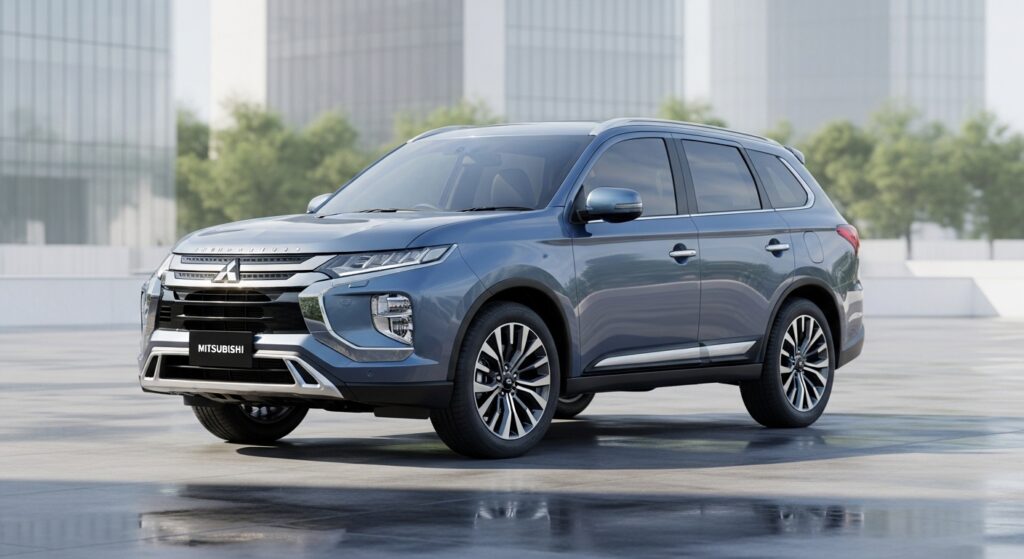
One reason this topic is confusing is that “Mitsubishi” is both a brand name and a group identity.
What the Mitsubishi Group Actually Is
The Mitsubishi Group is a network of major Japanese companies with shared roots. It is not one giant parent company that owns every Mitsubishi business.
This group includes separate companies such as:
- Mitsubishi Corporation
- Mitsubishi Heavy Industries
- Mitsubishi Electric
- MUFG
- Mitsubishi Motors
These businesses are linked by history, branding, business ties, and in some cases cross-shareholding. But they are independent legal entities.
Who Owns Mitsubishi Motors Corporation
Mitsubishi Motors Corporation is the company that makes Mitsubishi vehicles. It is a standalone automaker, not just a division of another Mitsubishi company.
That means:
- Mitsubishi Motors has its own management
- it has its own board
- it issues its own shares
- it has its own investors and regulatory filings
So when someone asks “who owns Mitsubishi cars?”, the most accurate answer is:
Mitsubishi Motors Corporation makes the vehicles, and Nissan is its largest shareholder.
Who Owns Mitsubishi Electric, Mitsubishi Heavy Industries, and Mitsubishi Corporation?
These are different companies.
They are not owned by Mitsubishi Motors, and Mitsubishi Motors is not the parent company of all of them.
For example:
- Mitsubishi Electric is a separate company
- Mitsubishi Heavy Industries is a separate company
- Mitsubishi Corporation is a separate company
That is why asking “who owns Mitsubishi?” needs context.
Do you mean:
- Mitsubishi cars?
- Mitsubishi air conditioners?
- Mitsubishi heavy machinery?
- Mitsubishi trading operations?
The answer depends on which Mitsubishi business you mean.
Mitsubishi Ownership Structure Explained
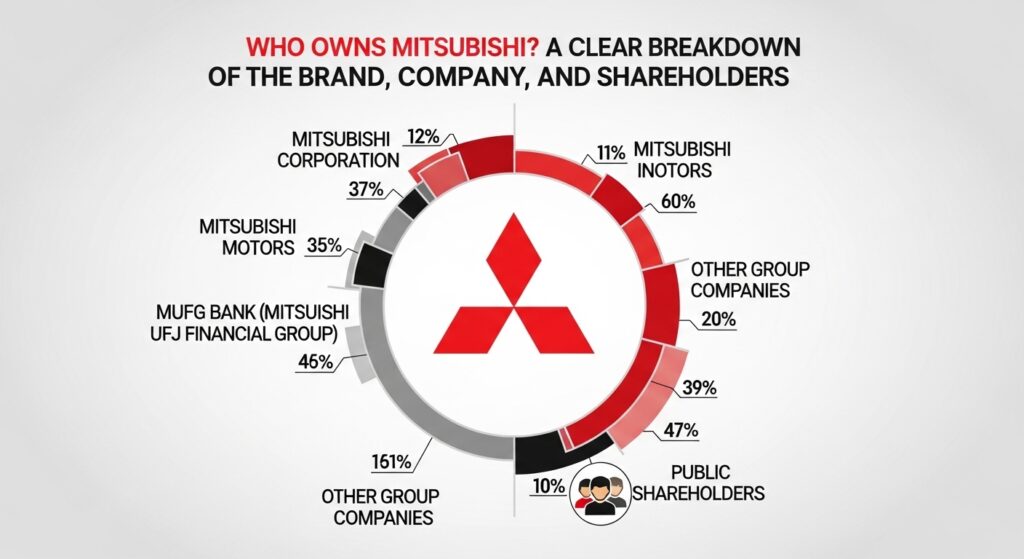
To understand Mitsubishi ownership, you need to separate share ownership from brand identity.
Mitsubishi Motors Is a Public Company
Mitsubishi Motors is not privately owned by one family or one corporation.
It is a public company, which means its shares are held by:
- institutional investors
- strategic corporate shareholders
- financial firms
- individual investors
Because it is publicly traded, ownership can shift over time as shares are bought and sold.
There Is No Single “Mitsubishi Parent Company”
A major point many articles miss is this:
There is no single master corporation that owns every Mitsubishi company.
The Mitsubishi name is associated with a historic Japanese business group, often described as a keiretsu. In simple terms, that means a loose network of related companies rather than one central holding company.
So if you are searching for a Mitsubishi parent company, the answer is usually:
There is no single parent company for all Mitsubishi businesses.
How Control Works in Practice
Ownership is not just about who has the name. It is about:
- who owns the shares
- who appoints directors
- who influences strategy
- who has voting power
Because Nissan owns the largest stake in Mitsubishi Motors, it has significant strategic influence. But Mitsubishi Motors still operates as its own listed company with its own corporate governance structure.
That distinction matters.
A company can be strongly influenced by a major shareholder without being fully absorbed into that shareholder’s business.
Is Mitsubishi Owned by Nissan?
This is one of the most common search questions, and the answer is:
Nissan does not own all of Mitsubishi, but it does own a major stake in Mitsubishi Motors.
Why Nissan Bought a Stake in Mitsubishi Motors
Nissan bought a large stake in Mitsubishi Motors in 2016 after Mitsubishi faced a fuel economy data scandal in Japan.
The deal gave Nissan a major ownership position and brought Mitsubishi Motors more closely into the Renault-Nissan-Mitsubishi Alliance.
This move helped Mitsubishi in several ways:
- stronger financial support
- access to shared technology
- better purchasing scale
- broader strategic cooperation
How Much of Mitsubishi Does Nissan Own?
The most widely cited public figure is about 34% of Mitsubishi Motors.
That makes Nissan the largest shareholder.
However, it does not mean Nissan owns:
- all Mitsubishi companies
- the entire Mitsubishi brand worldwide
- every business that uses the Mitsubishi name
It means Nissan has a major ownership interest in Mitsubishi Motors specifically.
What Nissan Can and Cannot Influence
Nissan can influence areas such as:
- strategy
- partnerships
- technology sharing
- platform development
- alliance coordination
But Nissan does not simply replace Mitsubishi Motors as a separate company.
Mitsubishi Motors still has:
- its own corporate identity
- its own products
- its own regional strategy
- its own leadership structure
So if you ask, “Is Mitsubishi part of Nissan?”, the best answer is:
Mitsubishi Motors is allied with Nissan, and Nissan is its largest shareholder, but Mitsubishi Motors remains a separate automaker.
A Short History of Who Owns Mitsubishi
Mitsubishi Began as a Large Japanese Industrial Group
Mitsubishi started in Japan as a broad industrial and commercial enterprise. Over time, it expanded into shipping, heavy industry, finance, trading, electrical equipment, and automobiles.
After World War II, the original Mitsubishi structure was broken up, and the companies evolved into a network of related but separate businesses.
Mitsubishi Motors Became a Separate Car Company
The automotive business developed within Mitsubishi Heavy Industries before becoming Mitsubishi Motors Corporation in 1970.
That was an important shift because it created a dedicated automobile company rather than leaving vehicle production as just one part of a much larger industrial business.
Major Ownership Changes That Matter Today
The most important modern ownership change came in 2016, when Nissan bought its major stake in Mitsubishi Motors.
That changed the conversation from:
- “Mitsubishi is part of the old Mitsubishi group”
to:
- “Mitsubishi Motors is a public car company with Nissan as its largest shareholder”
That is the ownership reality most consumers care about today.
What Mitsubishi Ownership Means for Car Buyers
For most people, the big question is not only who owns Mitsubishi, but also:
Does it matter if I want to buy a Mitsubishi vehicle?
The answer is yes, but mostly in practical ways.
Ownership Can Affect Technology and Product Development
Because of its alliance ties, Mitsubishi may benefit from:
- shared vehicle platforms
- engineering partnerships
- joint purchasing
- powertrain development
- broader market resources
That can help reduce costs and improve efficiency.
For buyers, this may influence:
- model availability
- technology features
- repair compatibility
- long-term product planning
Safety and Legal Compliance Still Matter More Than Ownership Headlines
Ownership alone does not make a car safe or unsafe.
What matters more is whether Mitsubishi vehicles meet:
- local safety standards
- emissions rules
- recall obligations
- warranty laws
- consumer protection regulations
Mitsubishi Motors must comply with the laws of the markets where it sells vehicles. That includes regulatory oversight for safety, recalls, emissions, and dealer practices.
So if you are wondering whether ownership affects safety, the honest answer is:
Only indirectly.
Ownership can influence resources and strategy, but vehicle safety is still governed by engineering quality, testing, and legal compliance.
Warranty, Parts, and Service Support
For buyers, ownership may matter in these areas:
- dealer network stability
- parts supply
- service support
- long-term brand confidence
- resale value perception
A company with stronger alliance support can be in a better position to manage costs, technology access, and product continuity. That can improve the ownership experience, especially when it comes to maintenance and parts availability.
What Mitsubishi Ownership Means for Investors and Business Partners
If you are looking at Mitsubishi from an investment or business angle, ownership matters even more.
Mitsubishi Motors Is a Publicly Traded Company
That means you should think in terms of:
- shareholder structure
- voting rights
- strategic influence
- alliance relationships
- corporate governance
A public company is not “owned” in the simple sense. It is owned by its shareholders, with the largest shareholders often having the most influence.
Governance and Ethics Matter
Serious investors also look at:
- board oversight
- executive accountability
- regulatory disclosures
- financial transparency
- ethics and compliance systems
Mitsubishi Motors’ past controversies made governance a bigger issue for analysts and shareholders. That is one reason ownership changes and alliance support matter: they can affect trust, management discipline, and long-term reputation.
How to Verify Current Ownership Safely and Accurately
If you need the latest ownership data, do not rely only on blogs or forum posts.
Check:
- Mitsubishi Motors investor relations
- annual securities reports
- Tokyo Stock Exchange disclosures
- official Nissan investor materials
- audited financial statements
This is the best way to confirm the most recent shareholder percentages because they can change over time.
Common Myths About Who Owns Mitsubishi
Myth 1: One Company Owns All Mitsubishi Businesses
This is false.
There is no single corporation that owns every Mitsubishi company.
Myth 2: Mitsubishi Motors and Mitsubishi Electric Are the Same Company
They are not.
They share the Mitsubishi name, but they are separate businesses.
Myth 3: Nissan Owns All of Mitsubishi
Not true.
Nissan is the largest shareholder in Mitsubishi Motors, not the owner of the entire Mitsubishi universe.
Myth 4: Renault Directly Owns Mitsubishi
Not directly in the way many people assume.
Renault’s connection comes through the broader alliance structure, not through simple direct ownership of Mitsubishi Motors as a whole.
FAQ: Who Owns Mitsubishi?
Who owns Mitsubishi Motors right now?
Mitsubishi Motors is owned by its shareholders because it is a public company. Nissan is its largest shareholder based on the latest broadly available public data through 2024.
Who owns the Mitsubishi brand?
There is no simple one-line answer for the entire Mitsubishi name across all industries. The Mitsubishi identity is used by multiple independent companies within the broader Mitsubishi group through long-standing corporate and trademark arrangements.
Is Mitsubishi still a Japanese company?
Yes. Mitsubishi Motors is a Japanese automaker headquartered in Japan.
Is Mitsubishi owned by Nissan?
Not completely. Nissan owns a major stake in Mitsubishi Motors and has significant influence, but Mitsubishi Motors remains a separate listed company.
Is Mitsubishi a good car brand because of Nissan’s involvement?
Ownership alone does not determine whether a brand is good. Buyers should also look at reliability, safety ratings, warranty terms, dealer support, maintenance costs, and resale value.
Can ownership changes affect safety, warranty, or resale value?
Yes, but usually indirectly. Ownership can affect product planning, technology sharing, brand stability, and long-term support. Safety and warranty obligations, however, are still governed by engineering standards and local law.
Final Verdict: Who Really Owns Mitsubishi?
If you mean Mitsubishi cars, the clearest answer is:
Mitsubishi Motors is a public Japanese automaker, and Nissan is its largest shareholder.
If you mean the broader Mitsubishi brand, the answer is more complex:
Mitsubishi is not one company owned by one parent. It is a group of separate businesses with shared history, shared branding, and independent ownership structures.
So the most accurate final takeaway is this:
Nissan does not own all of Mitsubishi. It mainly holds a major stake in Mitsubishi Motors, while the wider Mitsubishi group remains a network of separate companies.
If you are researching the brand as a buyer, investor, or business partner, that distinction is the key thing to understand.

Johnson is an automotive content writer and car enthusiast covering the US auto market. He specializes in new car launches, EVs, pickup trucks, SUVs, comparisons, and buyer guides. With a strong focus on real-world specs, pricing, and performance, his work helps readers make informed car-buying decisions.