 Skip to content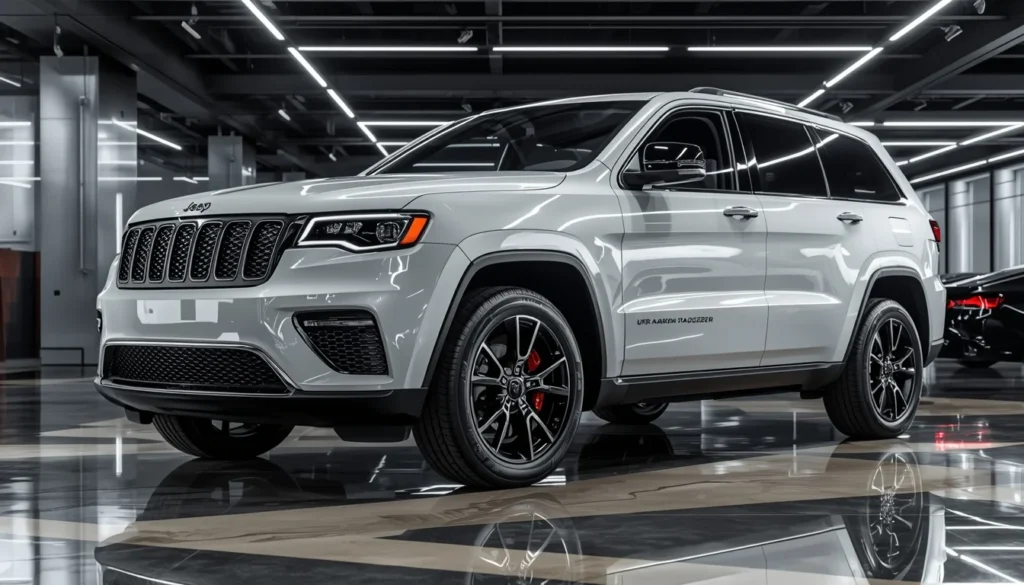
What Is the Jeep Grand Wagoneer?
The Jeep Grand Wagoneer car is a full-size luxury SUV that represents Jeep’s return to the premium three-row segment. Reintroduced in 2022 after a decades-long hiatus, this vehicle targets affluent buyers seeking American luxury combined with genuine off-road capability.
Unlike the standard Wagoneer, the Grand Wagoneer sits at the top of Jeep’s lineup. It competes directly with the Cadillac Escalade, Lincoln Navigator, and Range Rover.
The Grand Wagoneer aims to blend traditional Jeep ruggedness with high-end materials, advanced technology, and family-friendly space. It’s designed for buyers who want luxury without sacrificing capability.
Heritage and Modern Rebirth
The original Wagoneer debuted in 1963 and became an icon of American SUVs. The Grand Wagoneer variant, introduced in 1984, was one of the first luxury SUVs.
After production ended in 1991, the nameplate disappeared for three decades. The 2022 relaunch marked Jeep’s ambitious push into the premium market.
Today’s Grand Wagoneer shares architecture with the standard Wagoneer but features more luxurious appointments, additional technology, and premium trim options.
Target Audience and Market Position
The Grand Wagoneer targets families and individuals seeking a spacious, capable SUV with upscale amenities. Typical buyers prioritize interior space, towing capacity, and brand heritage.
This vehicle appeals to those who want American luxury over European alternatives. It’s positioned for buyers who value utility alongside premium features.
Price points place it firmly in luxury territory, competing with vehicles costing $90,000 and above.
Jeep Grand Wagoneer Exterior Design and Build Quality
The Grand Wagoneer features bold, commanding styling that emphasizes its size and presence. The front fascia showcases Jeep’s signature seven-slot grille, now rendered in chrome and designed to convey premium status.
LED headlights and taillights come standard across all trims. The overall design balances traditional SUV proportions with modern luxury cues.
Dimensions and Road Presence
At over 214 inches long and 84 inches wide, the Grand Wagoneer is genuinely large. Ground clearance exceeds 10 inches with available air suspension.
The wheelbase stretches to 130 inches, contributing to interior space and ride comfort. Curb weight approaches 6,000 pounds depending on configuration.
These dimensions ensure road presence but require consideration for garage space and parking.
Exterior Features and Options
Standard features include power-folding mirrors, hands-free liftgate, and roof rails. Higher trims add adaptive LED lighting and larger wheel options up to 22 inches.
Available two-tone paint schemes enhance the premium appearance. Chrome or body-color accents differentiate trim levels.
Build quality generally meets expectations for the price point, though some early production models experienced minor fit-and-finish concerns.
Interior Features and Luxury Amenities
The Grand Wagoneer’s cabin represents Jeep’s most luxurious effort to date. Premium materials include real wood trim, leather upholstery, and metal accents throughout.
The interior layout prioritizes space and comfort for all three rows. Attention to detail includes ambient lighting, soft-touch surfaces, and well-damped controls.
Seating Capacity and Comfort
Standard seating accommodates seven passengers with second-row captain’s chairs. An optional eight-passenger configuration includes a second-row bench.
Front seats offer extensive power adjustment, heating, cooling, and massage functions. Lumbar support and memory settings come standard on higher trims.
Second-row seats provide genuine adult comfort with ample legroom and reclining capability. Third-row access is easier than many competitors thanks to wide door openings.
First and Second Row Experience
Front occupants enjoy commanding seating positions with excellent visibility. The driver faces a configurable digital instrument cluster and available head-up display.
Second-row passengers benefit from dedicated climate controls, USB ports, and available entertainment screens. Legroom rivals or exceeds most competitors.
Captain’s chairs in the second row enhance comfort for longer trips and improve third-row access.
Third Row Space and Practicality
The third row accommodates adults for shorter trips, though taller passengers may find headroom limited. It’s best suited for children or occasional use.
Access to the third row requires tilting and sliding second-row seats. The process is straightforward but not instantaneous.
Compared to competitors like the Escalade, the Grand Wagoneer’s third row offers similar space and comfort.
Technology and Infotainment Systems
The Grand Wagoneer features one of the most screen-heavy interiors in the automotive market. Standard equipment includes a 10.25-inch digital instrument cluster and 10.1-inch center touchscreen.
Higher trims add a passenger-side entertainment screen, front-seat console touchscreen, and larger main displays up to 12 inches.
Touchscreen Displays and Interface
The Uconnect 5 infotainment system powers all displays. The interface responds quickly and supports wireless Apple CarPlay and Android Auto.
Navigation comes standard with real-time traffic and weather updates. Voice recognition works reliably for common commands.
The passenger display allows independent control of entertainment and climate without interrupting the driver’s screen.
Sound System and Entertainment
Base models include a 19-speaker McIntosh audio system. Upgraded trims offer a 23-speaker McIntosh Reference system with 24-channel amplification.
Sound quality impresses across all configurations. The premium system delivers concert-hall acoustics with exceptional clarity and bass response.
Rear-seat entertainment includes available 10.1-inch touchscreens in the second row with wireless headphone connectivity and HDMI inputs.
Cargo Space and Storage Solutions
Behind the third row, cargo capacity measures 27.4 cubic feet. That expands to 70.9 cubic feet with the third row folded and 116.7 cubic feet with both rear rows down.
Storage compartments throughout the cabin include large door pockets, center console bins, and cupholders. A front-row console includes wireless phone charging.
Cargo capacity falls short of the Chevrolet Suburban but exceeds the Cadillac Escalade slightly.
Jeep Grand Wagoneer Specifications and Performance
The Grand Wagoneer comes standard with a 6.4-liter V8 engine producing 471 horsepower and 455 lb-ft of torque. An eight-speed automatic transmission handles shifting.
Four-wheel drive with low-range gearing comes standard, maintaining Jeep’s off-road credibility. The Quadra-Lift air suspension provides five height settings.
Engine Options and Capabilities
The standard 6.4-liter naturally aspirated V8 delivers strong acceleration for a vehicle this size. Zero-to-60 mph times hover around 6 seconds.
Power delivery is smooth and linear. The engine note provides a satisfying rumble without excessive cabin intrusion.
An available turbocharged inline-six Hurricane engine offers plug-in hybrid capability in certain markets, though availability varies by model year and region.
Towing Capacity and Payload
Maximum towing capacity reaches 10,000 pounds when properly equipped. That’s sufficient for large boats, travel trailers, or toy haulers.
Payload capacity approaches 1,400 pounds depending on configuration. Both figures compete well within the segment.
Integrated trailer brake controllers and trailer backup assist make towing more manageable for less experienced drivers.
Fuel Economy and Efficiency
EPA estimates for the V8 range from 13-14 mpg city to 19 mpg highway. Combined ratings settle around 15-16 mpg.
Real-world fuel economy typically matches EPA estimates during highway driving but can drop below 12 mpg in city traffic or when towing.
Premium fuel is recommended for optimal performance, adding to operating costs.
Driving Experience and Handling
Despite its size, the Grand Wagoneer handles predictably. Steering weight is appropriate, and body roll is well-controlled for such a tall, heavy vehicle.
The air suspension adapts to driving conditions, lowering for highway stability or raising for off-road clearance. Ride quality remains composed over most surfaces.
Acceleration feels strong when needed. Highway merging and passing present no issues.
Off-Road Capability
Genuine off-road capability separates the Grand Wagoneer from some luxury competitors. Low-range gearing, four-wheel drive, and terrain management systems enable confident trail driving.
Ground clearance reaches 10.9 inches in the highest suspension setting. Approach and departure angles accommodate moderate obstacles.
Most buyers won’t exploit full off-road potential, but the capability exists when needed.
Safety Features and Ratings
The Grand Wagoneer includes a comprehensive suite of active and passive safety features. Standard equipment includes forward collision warning, automatic emergency braking, and blind-spot monitoring.
Additional available systems include adaptive cruise control, lane-keeping assist, and night vision with pedestrian detection.
Standard Safety Equipment
All models feature multiple airbags, electronic stability control, and anti-lock brakes. A rearview camera with dynamic guidelines comes standard.
Parking sensors front and rear help manage the vehicle’s size. Rear cross-traffic alert warns of approaching vehicles when reversing.
Tire pressure monitoring and electronic roll mitigation enhance everyday safety.
Advanced Driver Assistance Systems
Available advanced systems include Active Driving Assist, which combines adaptive cruise control and lane centering for semi-autonomous highway driving.
The system works effectively on well-marked roads but requires frequent driver input. It’s a convenience feature rather than full autonomy.
Intersection collision assist and highway assist with lane change support improve on higher trim levels.
Crash Test Ratings
Crash test ratings from NHTSA and IIHS were not immediately available at the vehicle’s launch. As testing occurred, the Grand Wagoneer earned respectable scores in most categories.
The vehicle’s size and weight provide inherent protection in collisions. Advanced safety systems help prevent accidents before they occur.
Prospective buyers should check current ratings from NHTSA and IIHS for the specific model year of interest.
Jeep Grand Wagoneer Trim Levels and Configurations
The Grand Wagoneer lineup includes Series I, Series II, and Series III trim levels, along with the ultra-premium Obsidian model.
Each trim builds on the previous with additional luxury features, technology, and refinement. Even the base Series I includes substantial equipment.
Series I Features
Series I represents the entry point with standard four-wheel drive, leather upholstery, and the McIntosh audio system. The 10.25-inch digital cluster and 10.1-inch center display come included.
Standard features also cover heated front seats, power liftgate, and tri-zone automatic climate control. LED lighting and 20-inch wheels round out the base specification.
This trim provides core Grand Wagoneer luxury at the lowest price point.
Series II Upgrades
Series II adds ventilated front seats, heated second-row seats, and the passenger-side entertainment display. Upgraded interior materials and additional ambient lighting enhance cabin ambiance.
A hands-free driving assist system becomes available. Larger wheels and additional exterior chrome distinguish this trim visually.
Many buyers find Series II offers the best balance of features and value.
Series III and Obsidian
Series III includes semi-aniline leather, upgraded wood trim, and the premium McIntosh Reference audio system. Rear entertainment screens and additional luxury touches justify the price increase.
The Obsidian trim represents the pinnacle with exclusive materials, unique styling elements, and maximum available features. It targets buyers seeking the ultimate Grand Wagoneer experience.
Obsidian pricing approaches or exceeds $120,000 depending on options.
Jeep Grand Wagoneer Pricing and Ownership Costs
Base pricing for the Grand Wagoneer starts around $95,000 for Series I. Series II models begin near $105,000, while Series III pricing exceeds $115,000.
The Obsidian trim pushes pricing past $120,000 before options. These figures place the Grand Wagoneer firmly in luxury territory.
Total Cost of Ownership
Beyond purchase price, buyers should consider fuel costs, insurance, and maintenance. Premium fuel requirements and low fuel economy increase ongoing expenses.
Insurance costs reflect the vehicle’s value and size. Expect premiums higher than mainstream SUVs but comparable to other luxury three-row models.
Depreciation typically follows patterns of other large luxury SUVs. First-year depreciation can be significant, though strong demand may help residual values.
Maintenance and Repair Expenses
Routine maintenance costs align with luxury vehicle expectations. Oil changes, tire replacements, and brake service will exceed mainstream vehicle costs.
Jeep’s warranty coverage includes three years or 36,000 miles basic and five years or 60,000 miles powertrain. Extended warranty options are available.
Dealer service may be required for complex systems, potentially increasing costs compared to independent shops.
Insurance Considerations
Insurance companies classify the Grand Wagoneer as a luxury SUV, resulting in higher premiums. Factors include vehicle value, replacement costs, and driver demographics.
Safety features may qualify for discounts. Shopping among multiple insurers helps identify the best rates.
Annual insurance costs typically range from $2,000 to $3,500 depending on location and coverage.
How the Jeep Grand Wagoneer Compares to Competitors
The Grand Wagoneer enters a competitive segment with established luxury players. Understanding how it stacks up helps buyers make informed decisions.
Jeep Grand Wagoneer vs Cadillac Escalade
The Escalade offers similar size, luxury, and three-row seating. Cadillac’s brand carries more luxury heritage, and Super Cruise provides more advanced semi-autonomous driving.
The Grand Wagoneer counters with standard V8 power, more off-road capability, and fresh styling. Pricing is comparable, though high-end Escalade trims can exceed the Grand Wagoneer.
Buyers seeking American luxury will find both appealing. The choice often comes down to brand preference and specific feature priorities.
Grand Wagoneer vs Lincoln Navigator
The Navigator emphasizes smooth, refined luxury over off-road capability. Its twin-turbo V6 provides strong performance with slightly better fuel economy.
Lincoln’s interior feels more contemporary in design. The Navigator’s ride quality is softer and more compliant.
The Grand Wagoneer offers more traditional SUV character and superior off-road credentials. Towing capacity favors the Jeep slightly.
Grand Wagoneer vs Range Rover
Range Rover brings European luxury and exceptional off-road engineering. Interior quality and brand prestige favor the British brand.
However, Range Rover reliability concerns and higher maintenance costs give buyers pause. Pricing for comparably equipped models significantly exceeds the Grand Wagoneer.
The Jeep offers better value and likely lower ownership costs, though it can’t match Range Rover’s cachet.
Grand Wagoneer vs BMW X7
The BMW X7 offers more engaging driving dynamics and a sportier character. Its technology and interior design feel more modern.
However, the X7 lacks serious off-road capability and towing capacity. Third-row space is tighter than the Grand Wagoneer.
Buyers prioritizing driving enjoyment may prefer the BMW. Those needing utility and space will favor the Jeep.
Reliability and Common Issues
As a relatively new model, long-term reliability data remains limited. Early production vehicles experienced some quality control issues typical of new platforms.
Reported problems include electronic glitches, infotainment freezes, and minor trim rattles. Most issues were addressed through software updates or warranty repairs.
Long-Term Reliability Outlook
Jeep’s reliability reputation has improved in recent years but still lags some competitors. The Grand Wagoneer’s complexity introduces potential failure points.
The V8 engine is proven and generally reliable. Transmission and four-wheel-drive systems use established technology.
Electronic systems represent the biggest unknown. Software updates have resolved many early concerns.
Known Problems and Owner Complaints
Some owners report intermittent issues with the digital displays. Touchscreen responsiveness occasionally lags.
Air suspension problems appeared in early models, though less frequently than in some competitors. Firmware updates addressed many concerns.
Build quality complaints focus on minor interior squeaks and rattles rather than major mechanical failures.
Warranty Coverage and Support
Jeep’s standard warranty provides adequate coverage for most buyers. Extended warranty options can provide additional peace of mind given the vehicle’s complexity.
Dealer networks are widely available, though service quality varies by location. Major metropolitan areas typically offer better support than rural regions.
Premium roadside assistance is included for the warranty period.
Pros and Cons of the Jeep Grand Wagoneer
Advantages
The Grand Wagoneer offers genuine three-row space with adult-friendly accommodations in all rows. Interior materials and craftsmanship meet luxury expectations.
Real off-road capability sets it apart from some luxury competitors. Towing capacity of 10,000 pounds serves utility needs.
Strong V8 power provides satisfying performance. The technology package impresses with multiple screens and features.
American luxury at a more accessible price point than European alternatives attracts value-conscious buyers.
Disadvantages
Fuel economy is poor, even by full-size SUV standards. Premium fuel requirements add to operating costs.
Early reliability concerns and limited long-term data create uncertainty. Some interior materials don’t match the price point in lower trims.
The infotainment system, while feature-rich, can be complex to navigate. Screen overload may overwhelm some users.
Resale value remains unproven compared to established luxury SUVs. Brand perception doesn’t carry the same prestige as Cadillac or Range Rover.
Who Should Buy the Jeep Grand Wagoneer
The ideal Grand Wagoneer buyer needs three-row seating with genuine luxury features. Families with multiple children benefit from the spacious cabin.
Buyers who tow regularly will appreciate the capability. Those who want off-road ability without sacrificing luxury find few alternatives.
This vehicle suits buyers who prefer American brands and value utility alongside premium features. It works for those upgrading from mainstream three-row SUVs to luxury territory.
Ideal Buyer Profile
A typical owner might be a family with three or more children, a couple who tows an RV or boat, or someone who wants presence and capability.
Income levels typically exceed $200,000 annually to comfortably afford purchase price and operating costs. Many buyers own secondary vehicles for daily commuting.
Brand loyalty to Jeep or desire for American luxury often factors into the decision.
Who Should Consider Alternatives
Buyers prioritizing fuel efficiency should look elsewhere. The Grand Wagoneer’s appetite for premium fuel makes it expensive to operate.
Those seeking cutting-edge technology or the most refined ride might prefer German or Japanese luxury SUVs. Build quality concerns may deter risk-averse buyers.
Urban dwellers with limited parking may find the size impractical. The vehicle’s dimensions challenge city driving and parking.
Buyers focused on brand prestige might prefer Cadillac, Range Rover, or Mercedes-Benz. Resale value concerns favor more established nameplates.
Final Buyer’s Advice and Verdict
The Jeep Grand Wagoneer successfully delivers American luxury combined with genuine capability. It fills a niche for buyers wanting utility alongside premium features.
Consider this vehicle if you need three-row space, towing capability, and off-road potential with luxury appointments. The Grand Wagoneer excels in these areas.
Be prepared for high fuel costs and potential early reliability concerns. Test drive competing vehicles to confirm the Grand Wagoneer meets your expectations.
Higher trim levels offer better value through included features, though even Series I provides substantial equipment. Obsidian pricing seems excessive unless you desire maximum exclusivity.
Negotiate carefully, as dealer markups were common during initial availability. Inventory levels have stabilized, improving buyer leverage.
Overall, the Grand Wagoneer represents a compelling option in the luxury three-row segment, particularly for buyers who value capability and American heritage. It won’t suit everyone, but it successfully delivers on its core promises for the right buyer.

Johnson is an automotive content writer and car enthusiast covering the US auto market. He specializes in new car launches, EVs, pickup trucks, SUVs, comparisons, and buyer guides. With a strong focus on real-world specs, pricing, and performance, his work helps readers make informed car-buying decisions.