
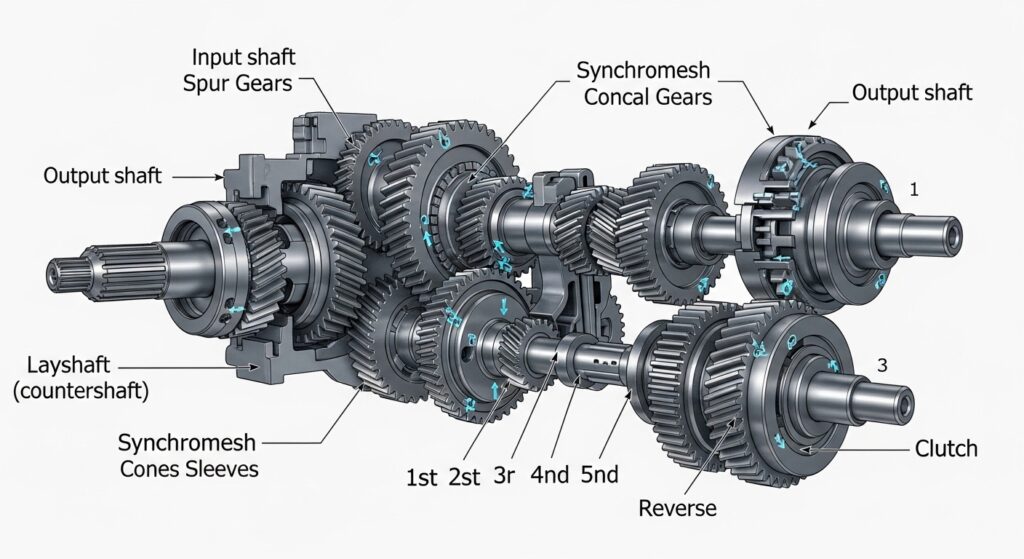
“Gear and gearing” are fundamental to how machines, vehicles, and tools operate. From the transmission in your car to the drivetrain of a bicycle, gearing determines how efficiently power is transferred, how fast you can go, and how much torque is available.
Understanding gearing helps improve performance, reduce wear, and enhance safety in everyday use.
What Is Gear and How Does Gearing Work?
A gear is a toothed mechanical component that meshes with another gear to transfer motion and force. Gearing refers to the system that controls how speed and torque are modified between input and output.
When two gears interact, a smaller gear rotates faster with less torque, while a larger gear rotates slower but delivers more torque. This relationship forms the basis of power transmission in vehicles and machines.
Types of Gears and Gearing Systems
Spur, Helical, Bevel, and Worm Gears
Spur gears are simple and commonly used in basic machinery. Helical gears have angled teeth that provide smoother and quieter operation.
Bevel gears are designed to change the direction of motion, often used in differentials. Worm gears provide high reduction ratios and are used where compact design and torque multiplication are needed.
Planetary Gears and Compound Gear Trains
Planetary gear systems use a central gear with surrounding gears, allowing compact and efficient power transfer. These are widely used in automatic transmissions.
Compound gear trains combine multiple gears to achieve precise speed and torque control in industrial and automotive applications.
Gear Ratio and Its Real-World Impact
What Gear Ratio Means
A gear ratio defines how many times one gear rotates compared to another. A higher ratio increases torque but reduces speed, while a lower ratio increases speed but reduces torque.
Impact on Acceleration and Speed
Lower gears provide strong acceleration, making them ideal for starting or climbing hills. Higher gears allow efficient cruising at lower engine speeds, improving fuel economy and reducing engine wear.
Gear and Gearing in Cars
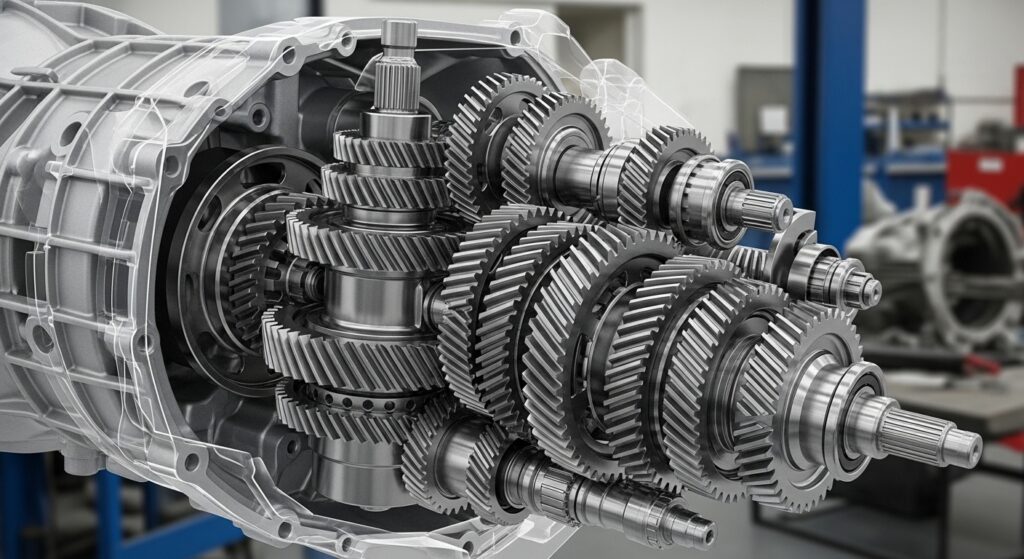
Manual Transmission Basics
Manual transmissions use multiple gear sets that the driver selects using a clutch and gear lever. Each gear offers a different balance between speed and torque.
Automatic and CVT Systems
Automatic transmissions use planetary gear systems to shift seamlessly. CVT systems provide continuous gear ratios, allowing smoother acceleration and improved efficiency.
Fuel Efficiency and Engine Protection
Proper gear selection ensures the engine runs within its optimal range. Using incorrect gears can lead to overheating, increased fuel consumption, and mechanical stress.
Gear and Gearing in Motorcycles
Motorcycles use compact gearing systems where shifting technique plays a critical role.
Gear Patterns and Shifting
Most motorcycles follow a standard shift pattern. Smooth clutch control and timely shifting improve ride quality and reduce wear.
Performance and Mileage
Short gearing improves acceleration, while taller gearing enhances fuel efficiency during highway riding.
Gear and Gearing in Bicycles
Chainrings and Cassettes
Bicycles use front chainrings and rear cassettes to create multiple gear combinations. This allows riders to adjust effort based on terrain.
Climbing and Speed Control
Lower gears make climbing easier, while higher gears allow faster speeds on flat roads or descents.
Gearbox and Gearing Components Overview
Key Components
A gearbox includes shafts, gears, bearings, and a casing. These components work together to transmit power efficiently.
Synchronizers and Selectors
In manual transmissions, synchronizers match gear speeds for smooth shifting, while selectors control gear engagement.
Automatic Gear Systems
Automatic systems use torque converters and planetary gears to adjust ratios without driver input.
Safe and Responsible Gear Use
Risks of Improper Gear Selection
Using the wrong gear can cause engine strain, overheating, or loss of control.
Engine Braking
Lower gears help control speed on descents, reducing brake wear and improving safety.
Preventing Gear Damage
Avoid over-revving, lugging the engine, or forcing gear changes. Proper driving habits extend component life.
Gearing and Machine Safety
Guarding Moving Parts
Exposed gears should always be protected with guards to prevent accidents.
Safety Standards
Industrial gear systems must comply with safety regulations to ensure reliable operation.
Personal Safety
Always use protective equipment and follow proper procedures when working with gear systems.
Legal and Compliance Aspects
Gear Modification Limits
Altering gear ratios may affect vehicle legality, speedometer accuracy, and emissions compliance.
Warranty and Insurance Impact
Modifying gearing can void warranties or affect insurance claims.
Inspection and Compliance
Significant modifications may require inspection to meet road safety standards.
When to Shift Gears
Smooth Shifting Techniques
Proper timing and coordination between clutch and throttle ensure smooth transitions.
Matching Gear to Conditions
Lower gears are ideal for hills and heavy loads, while higher gears suit cruising.
Driving Habits
Avoid bad habits like riding the clutch or using incorrect gears for extended periods.
Gearing for Different Conditions
City, Highway, and Towing
City driving requires frequent gear changes, while highway driving benefits from higher gears. Towing requires lower gears for control and power.
Weather Conditions
In slippery conditions, smooth gear changes help maintain traction and stability.
Seasonal Driving
Different seasons require adjustments in gear usage to maintain efficiency and safety.
Cost and Maintenance of Gear Systems
Maintenance Costs
Regular maintenance like oil changes and inspections prevents costly repairs.
Warning Signs
Unusual noises, difficulty shifting, or vibrations indicate potential issues.
Preventive Maintenance
Following recommended service intervals ensures long-lasting performance.
Gearing and Responsible Use
Ethical Responsibility
Maintaining gear systems properly ensures safety for both the user and others.
Avoiding Aggressive Driving
Harsh driving habits increase wear and reduce efficiency.
Environmental Impact
Efficient gearing reduces fuel consumption and emissions.
Expert Insights on Choosing the Right Gearing
Engineers balance performance and efficiency when designing gear systems.
Performance-focused gearing prioritizes acceleration, while efficiency-focused gearing improves fuel economy.
Consulting professionals before modifying gearing helps avoid reliability and safety issues.
Final Verdict
Gear and gearing are essential to how machines and vehicles operate.
Understanding gear ratios, selecting the right gear, and maintaining systems properly can significantly improve performance, safety, and efficiency.
Whether driving a car, riding a motorcycle, or cycling, mastering gearing is one of the most effective ways to enhance control, reduce costs, and extend the life of mechanical systems.